Caitlin Knowles Myers

Caitlin Knowles Myers

John G. McCullough Professor of Economics • Middlebury College

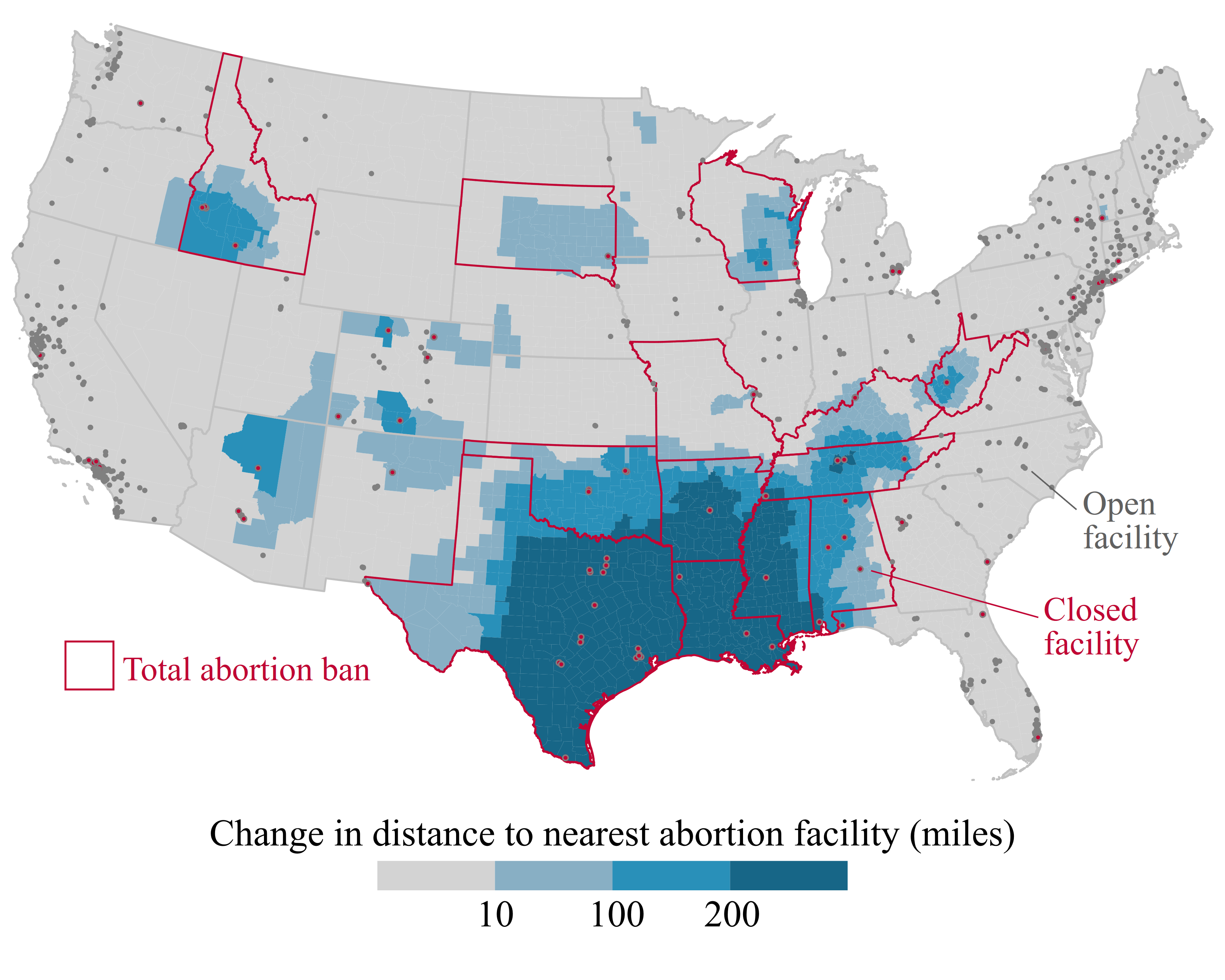
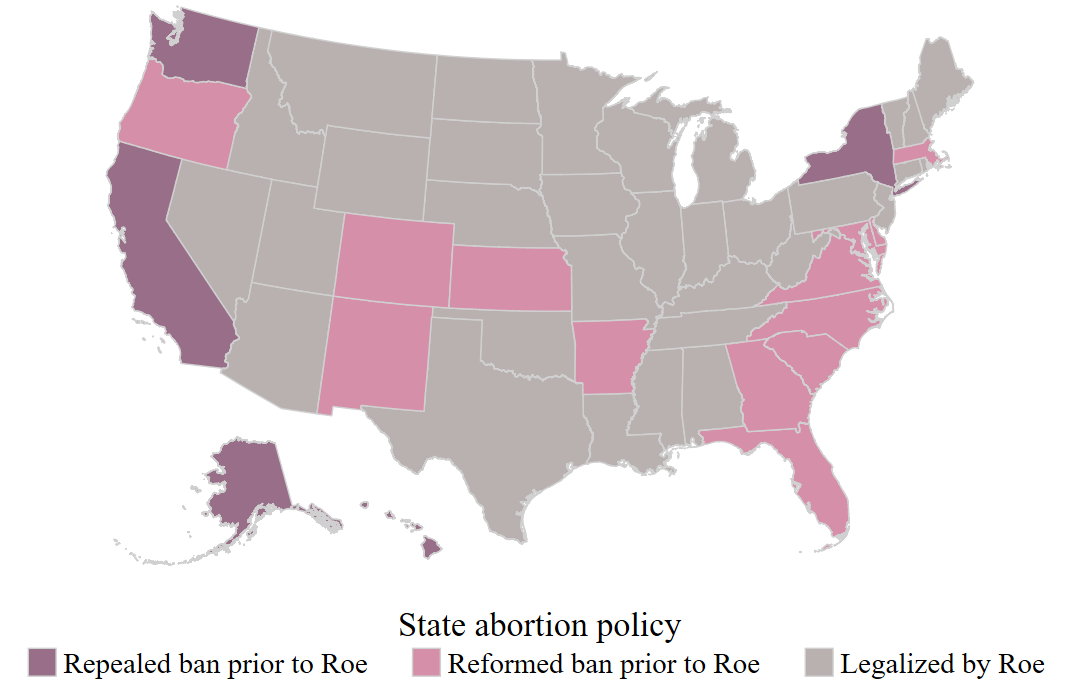
I am an economist and research associate at the National Bureau of Economic Research who studies the causal effects of abortion policies on people's lives. I spearheaded the amicus brief signed by more than 150 economists in Dobbs v. Jackson Women's Health Organization and testified before the U.S. Senate Budget Committee on the decision's economic consequences.

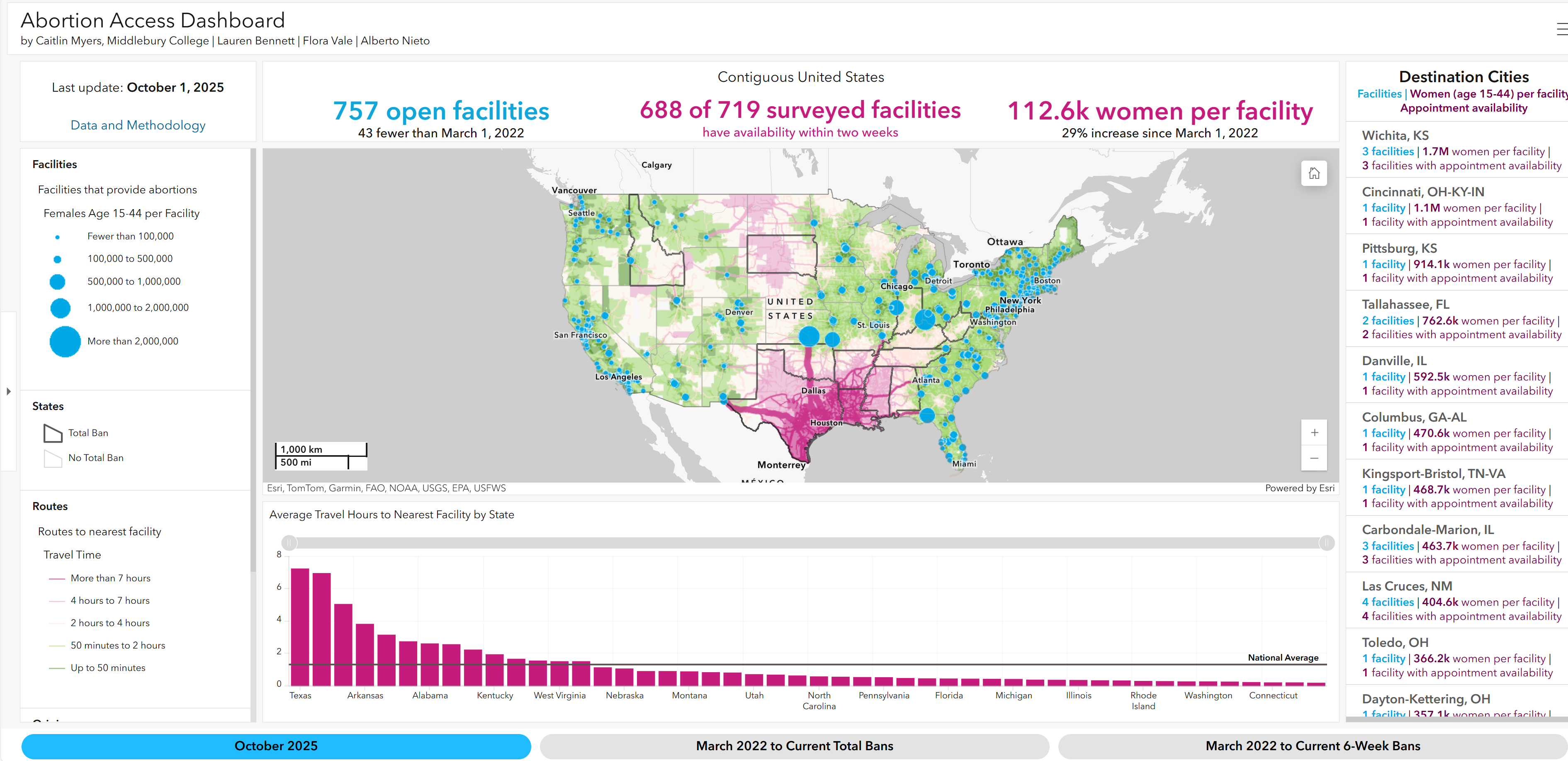
My current research tracks the ongoing effects of abortion policy on sexual behavior, births, maternal health, economic hardship, crime, and the physician workforce. I maintain the Abortion Access Dashboard and publicly available datasets on Open Science Framework.

I grew up in rural West Virginia and small-town Georgia; I reflect on how that shaped my work and my approach to political divides in a TEDxMiddlebury talk.

Research

Working Papers

Economics & Policy Journals

Medical & Public Health Journals

Data & Resources

I maintain several publicly available datasets and tools for researchers studying reproductive policy.

Teaching

I teach courses on econometrics and causal inference, and supervise research workshops. Below are links to syllabi for the courses I've taught most recently.

ECON 211

Regression Analysis

Last taught: Spring 2025

"Regression analysis" describes the basic technique economists (and many other types of scientists) use to examine the empirical evidence for all of the interesting theoretical questions that we dream up. Multiple regression techniques are used to estimate the effects of multiple exogenous variables on a variable that represents an outcome of interest. In this course, you will be introduced to the fundamentals of regression analysis: how to design and estimate a model, how to interpret the results, and how to critically analyze the validity of the techniques that you and others choose.

Syllabus
ECON 311

Causal Inference

Last taught: Fall 2024

In this course we will cover powerful and sophisticated empirical methodologies social scientists use to implement the scientific method and test hypotheses about cause and effect. We will begin with an overview of randomized trials: experiments in the laboratory and field. We will then discuss alternate, "quasi-experimental," approaches that empiricists adopt when randomized trials are not feasible or ethical. Along the way we will cover differences-in-differences estimation, event study designs, instrumental variables, and regression discontinuity designs.

Syllabus
ECON 701-702

Economics Senior Thesis Workshop

Last taught: Winter–Spring 2026

The senior research workshop is composed of no more than eight students working independently on research projects during winter and spring terms. Each student will meet frequently with the instructor to discuss his or her project. In addition, the class will sometimes meet collectively for lectures on common issues and to allow students to present and discuss their research.

Syllabus

In the Media

I regularly share research insights with journalists and podcasters covering reproductive policy.

Filter by Outlet

Articles & Appearances

Service

CeMENT Mentoring Workshops

Co-Director, 2025–present

American Economic Association program providing mentoring for women and nonbinary faculty in economics.

midd.data

Founding Director, 2020–2025

Middlebury's Initiative for Data and Digital Methods.

Academic Freedom Alliance

Founding Member

Non-profit organization dedicated to protecting faculty rights.